
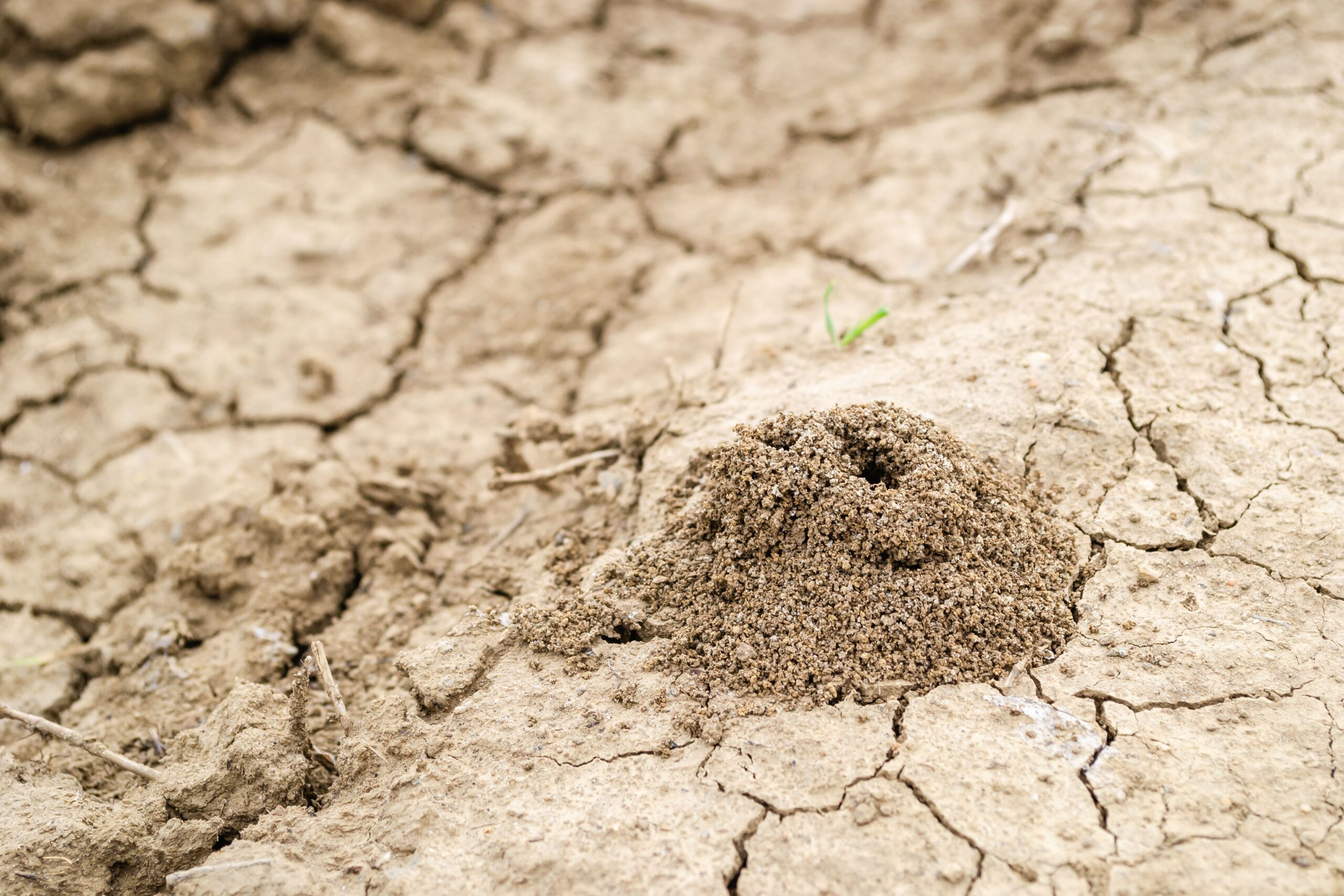
Something Is Swarming Around Your Home
You walk outside one morning and notice dozens, maybe hundreds, of winged insects emerging from the ground near your foundation. Or you find a pile of discarded wings on your windowsill. Or you see a cloud of flying insects around a tree stump in your garden.
Your first instinct is probably correct — something is swarming. The question is what.
Swarming is one of those pest events that causes immediate alarm, and understandably so. A swarm means a colony is mature, active, and reproducing. But whether that swarm requires urgent action or is simply a natural seasonal event depends entirely on what you’re dealing with.
The two most common swarming insects homeowners encounter are ants and termites. Telling them apart is not as straightforward as it might seem, and the difference matters enormously — a swarming ant colony is a nuisance, while swarming termites near your home are a serious warning sign that requires immediate attention.
Why Insects Swarm
Both ants and termites swarm for the same fundamental reason: reproduction. When a colony reaches maturity, it produces winged reproductive individuals — called alates — whose job is to fly out, find a mate, and establish new colonies.
Swarming is triggered by specific environmental conditions, typically a combination of temperature, humidity, and day length. This is why swarms often appear suddenly after rain, particularly in spring and early summer.
For ants, swarming is simply a normal part of the colony life cycle. The winged ants mate during the swarm, the males die shortly after, and the mated females attempt to establish new colonies. Most of these attempts fail and the new queens never successfully establish a colony.
For termites, swarming carries more serious implications. It means there is at least one mature termite colony in the vicinity — possibly in or near your home — that has grown large enough to produce reproductive individuals. Termite swarmers don’t eat wood themselves, but their presence indicates an established colony that does.
How to Tell Swarming Ants from Termites
This is the critical question, and fortunately there are reliable physical differences you can use to identify which you’re dealing with.
Look at the wings first. This is the most reliable distinguishing characteristic. Termite swarmers have four wings that are all roughly equal in length, extending well beyond the end of the abdomen. Ant swarmers also have four wings, but the front pair is noticeably larger than the rear pair, creating a clearly unequal appearance.
Look at the waist next. Ants have a distinctly pinched waist — a narrow connection between the thorax and abdomen that gives them their characteristic body shape. Termites have a broad, straight waist with no obvious pinching. If you can see a narrow waist, it’s an ant. If the body looks more uniform and tube-like, it’s likely a termite.
Look at the antennae. Ant antennae are distinctly elbowed or bent at an angle. Termite antennae are straight and beaded, like a string of tiny pearls. This is harder to see without a magnifying glass but is a reliable distinguishing feature.
Look at where they’re emerging from. Ants typically swarm from ant nests, which may be in the ground, in garden beds, under pavers, or in wall voids. Termites typically emerge from wood or from mud tubes connected to wood. If you see winged insects emerging from timber, wall cavities, or from mud tubes on your foundation, treat it as termites until proven otherwise.
What to Do If It’s Swarming Ants
Swarming ants are not a structural threat to your home. They are a nuisance and a sign that a mature ant colony exists nearby, but swarming itself does not cause damage.
The swarm typically lasts only a few hours to a day. Once the swarm disperses, the immediate situation resolves itself. You don’t need to do anything urgent.
However, swarming ants indicate an established colony nearby, and depending on the species, that colony may be causing problems — carpenter ants in particular can cause structural damage similar to termites by excavating wood for nesting. If you’re seeing large black ants swarming from wood in or around your home, treat it with the same urgency as a termite swarm.
For most swarming ant situations, the appropriate response is to identify where the colony is located and treat it directly. Our guides on ant identification and removal cover treatment options for different species in detail.
What to Do If It’s Swarming Termites
Swarming termites require immediate attention. Here is a step-by-step response.
Don’t panic, but do act quickly. Termite swarmers themselves don’t eat wood — they are focused entirely on mating and establishing new colonies. The immediate swarm is not causing damage. But the existing colony that produced the swarmers is.
Note exactly where the swarmers are emerging from. This tells you where the colony is — or at least where it has established access to your home. Photograph the location and the insects themselves if possible.
Collect a sample if you can. Capturing a few of the insects in a sealed bag or jar will help a pest professional identify the species accurately. This matters because treatment approaches differ between species.
Contact a licensed pest controller promptly. Termite treatment is not a DIY job in most situations, particularly for subterranean termites. A professional inspection will identify the extent of the infestation, the species involved, and the most appropriate treatment approach.
Do not disturb the swarm or spray it with insecticide. Spraying the swarmers may kill the visible insects but does nothing to address the colony and may cause it to relocate, making it harder to find and treat.
Check your home for other signs of termite activity while waiting for a professional inspection. Look for mud tubes, hollow-sounding wood, stuck doors and windows, and visible damage to timber.
When Is Swarming Season?
Different termite species swarm at different times of year, and this varies by region.
Subterranean termites, which are the most common and widespread species in the United States, typically swarm in spring — most often on warm days following rain. In southern states, swarming can begin as early as February or March. In northern states, it more commonly occurs in April and May.
Drywood termites, common in coastal areas and the southern United States, typically swarm in late summer and autumn.
Formosan termites and the new hybrid species swarm in late spring, typically in May and June, usually at night around light sources.
Carpenter ants, which are sometimes confused with termites, typically swarm in spring in the northern United States and can swarm at multiple times of year in southern states.
Preventing Termite Swarms Near Your Home
The most effective prevention is reducing conditions that attract termites to your property in the first place.
Eliminate wood-to-soil contact around your home. Remove dead tree stumps and roots from your garden. Fix any moisture problems including leaking pipes, poor drainage, and blocked gutters. Keep firewood stored away from the house and off the ground. Maintain a gap between garden mulch and your foundation. Have your home inspected annually by a licensed pest professional if you live in a termite-prone area.
A Note on 2026 Swarmer Activity
Pest control professionals are predicting heavy swarmer activity in spring 2026, based on winter conditions and long-term colony population patterns. If you haven’t had a termite inspection recently and you live in a termite-prone area, now is a good time to schedule one before swarming season peaks.
The Bottom Line
When you see a swarm of winged insects near your home, the most important thing you can do is correctly identify what you’re looking at. Use the wing, waist, and antenna characteristics described in this guide to make that determination. If you’re looking at termites, contact a pest professional promptly. If you’re looking at ants, assess the species and treat accordingly.
When in doubt, collect a sample and get a professional opinion. The cost of an inspection is insignificant compared to the cost of undetected termite damage.
While a professional inspection is the right call for a confirmed termite colony, many homeowners also keep termite detector spikes around the foundation as an early-warning tool between inspections.
This article contains affiliate links. If you purchase a product through our links we may earn a small commission at no extra cost to you.