
Those Tiny Moths Around Your Sink Aren’t Moths
You’ve probably noticed them — tiny winged insects hovering around your kitchen sink or bathroom drain. They look like miniature moths. They move slowly and seem to appear from nowhere.
They’re drain flies. And unlike most pest problems, they’re not coming in from outside.
They’re breeding inside your pipes.
The good news? You can eliminate them completely without a plumber or pest controller. This guide shows you exactly how.
What Are Drain Flies?
Drain flies — also called moth flies or sewer flies — are tiny insects about 2-5mm long. They have fuzzy wings that give them a moth-like appearance.
They don’t bite. They don’t carry disease in the way mosquitoes do. But they are a sign that your drain has a buildup of organic matter — the decomposing slime that lines the inside of pipes and provides the perfect breeding ground for these insects.
One female drain fly can lay up to 300 eggs in her short lifetime. Those eggs hatch within 48 hours. Which is why a small drain fly problem becomes a large one very quickly.
Where Do Drain Flies Come From?
Drain flies breed in the organic film that builds up inside:
- Kitchen sink drains
- Bathroom sink drains
- Shower and bath drains
- Floor drains in laundry rooms and garages
- Overflow drains in sinks and baths
- Rarely — sump pumps and septic systems
They are most common in:
- Drains that are used infrequently
- Drains with slow drainage or partial blockages
- Homes with older plumbing
- Warm humid climates — common in Queensland, Florida, and similar regions
Step 1 — Confirm You Have Drain Flies
Before treating make sure drain flies are actually the problem.
Here’s a simple test:
- Cut a piece of clear sticky tape
- Place it sticky side down over your drain opening
- Leave it overnight
- Check in the morning
If drain flies are present you’ll find some stuck to the tape. This also tells you which drain is the source — important if you have multiple drains in the room.
Step 2 — Clean the Drain Thoroughly
The breeding ground for drain flies is the organic slime inside your pipes. Killing adult flies without eliminating the slime is pointless — new eggs will hatch within days.
What you’ll need:
- Drain brush or flexible bottle brush
- Boiling water
- Baking soda
- White vinegar
- Dish soap
How to clean:
- Pour a full kettle of boiling water slowly down the drain
- Wait 5 minutes
- Pour half a cup of baking soda down the drain
- Follow with one cup of white vinegar
- Let it fizz for 10-15 minutes — this breaks down the organic slime
- Flush with another kettle of boiling water
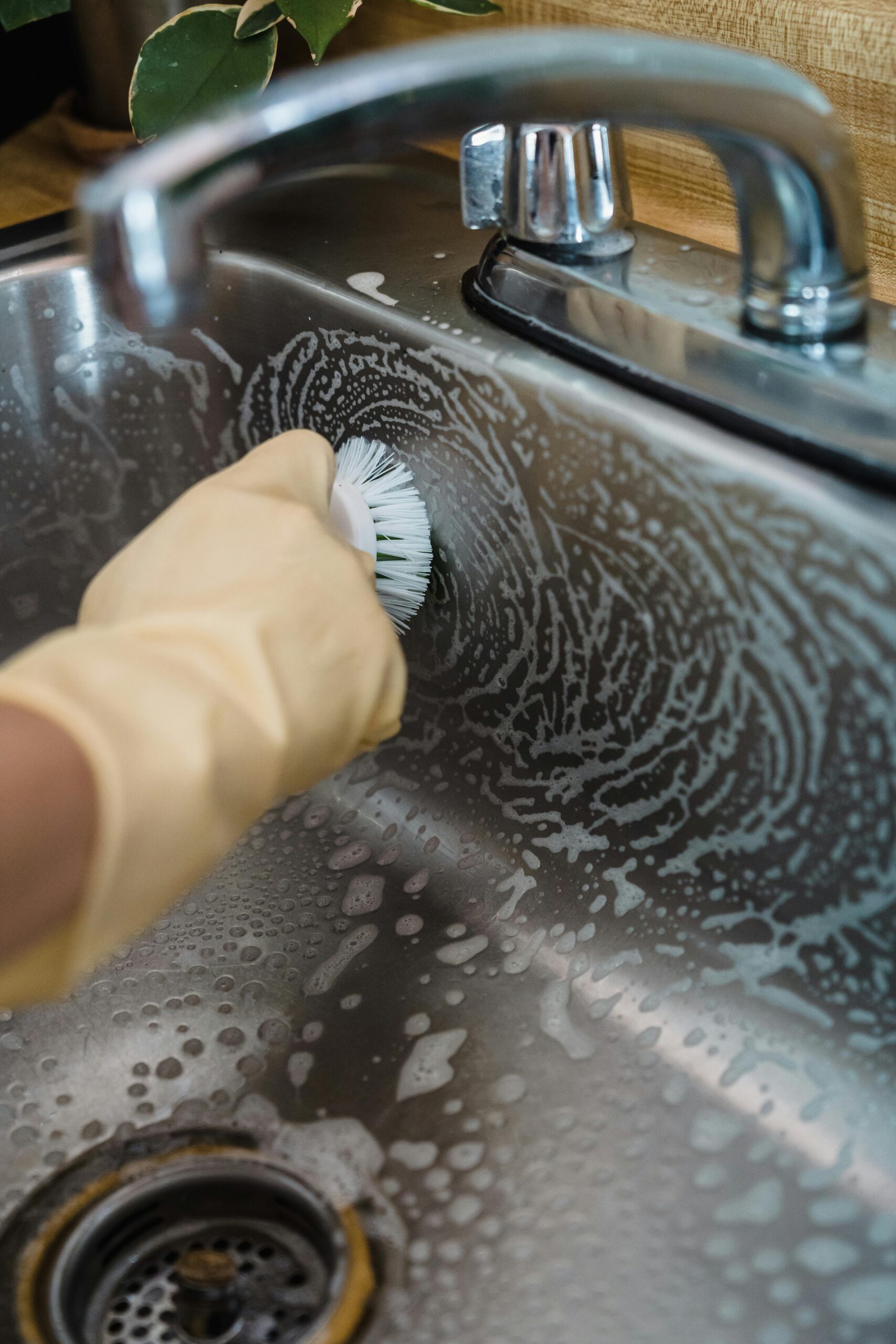
- Use a drain brush to physically scrub the inside of the drain opening as far as you can reach
- Flush again with boiling water
Do this process every day for a week for best results.
Step 3 — Use a Drain Gel
For established infestations a drain cleaning gel is more effective than the baking soda method alone. Look for a drain gel that specifically mentions organic matter elimination — not just a standard drain unblocker.
Pour the recommended amount down the affected drain at night when the drain won’t be used for several hours. This gives the gel time to break down the organic film that drain flies breed in.
Repeat every 3 days for 2 weeks.
Step 4 — Trap Adult Flies
While you’re eliminating the breeding ground in the drain you also need to deal with the adult flies that are already present.
Apple cider vinegar trap:
- Pour a small amount of apple cider vinegar into a glass
- Add a drop of dish soap — this breaks the surface tension
- Cover the glass with plastic wrap
- Poke several small holes in the plastic wrap
- Place near the affected drain
Drain flies are attracted to the vinegar smell, enter through the holes, and can’t escape.
Sticky traps:
Place yellow sticky insect traps near affected drains. Drain flies are attracted to the color yellow. Replace every few days.
Step 5 — Fix Slow Drains
Drain flies thrive in drains with slow drainage because standing water increases the organic buildup they breed in.
If your drain drains slowly:
- Try a plunger first
- Follow with the baking soda and vinegar treatment above
- Use a drain snake for deeper blockages
- If still slow consider a commercial drain cleaner or call a plumber
A freely draining pipe is a much less hospitable environment for drain flies.
Step 6 — Check Overflow Drains
This is the step most people miss.
Your bathroom sink and bath almost certainly have an overflow drain — a small hole near the top of the basin that prevents flooding. These overflow channels are almost never cleaned and are often full of the organic matter drain flies love.
To clean overflow drains:
- Use a small bottle brush or pipe cleaner
- Insert into the overflow hole
- Scrub back and forth
- Pour a small amount of baking soda and vinegar mixture into the overflow hole
- Flush with water
How Long Does it Take to Get Rid of Drain Flies?
Be realistic about the timeline:
- Adult flies: reduced within 2-3 days of treatment
- Eggs and larvae in drain: eliminated within 1-2 weeks of consistent treatment
- Complete elimination: typically 2-3 weeks
The key word is consistent. Treating once won’t solve the problem. Daily treatment for 2 weeks will.
Why Do Drain Flies Keep Coming Back?
If drain flies keep returning after treatment the most common reasons are:
- The organic film wasn’t fully eliminated from the drain
- An overflow drain was missed
- A rarely used drain elsewhere in the home wasn’t treated
- A slow drain is allowing organic matter to accumulate again
- In rare cases — a crack in a drain pipe allowing sewage to seep into wall voids
When to Call a Plumber
Most drain fly problems are solved with DIY treatment. Call a plumber if:
- Drain flies persist after 4 weeks of consistent treatment
- You have multiple drains affected throughout the house
- You notice a sewage smell accompanying the infestation
- You suspect a cracked or damaged drain pipe
Preventing Drain Flies Coming Back
Once eliminated keep them away with these simple habits:
- Pour boiling water down all drains once a week
- Clean drain stoppers regularly — organic matter builds up on them quickly
- Run infrequently used drains weekly — even just turning the tap on for a minute helps
- Clean overflow drains monthly
- Fix slow drains promptly — don’t let them sit
One Last Thing
Drain flies are a nuisance but they’re also a useful warning sign. Their presence tells you your drains need attention. Once you’ve dealt with the infestation and cleaned your drains properly you’ll likely find your plumbing running better than it has in years.
A clean drain is a pest free drain.
This article contains affiliate links. If you purchase a product through our links we may earn a small commission at no extra cost to you.